Fix My Mic Speaker – Essential Repair and Maintenance Tips
Your voice sounds muffled on calls. People keep asking you to repeat yourself. Recordings sound distant and distorted. These are not random glitches — they are the exact symptoms of a blocked or damaged mic speaker. Fix My Mic Speaker clears dust, moisture, and debris from your phone microphone using targeted acoustic vibration, restoring call clarity and recording quality without any physical contact or tools.
Looking for a complete speaker cleaning solution? Try our
fixmyspeakerlab.com tool to remove water, clear dust, and restore crystal-clear sound in seconds.
Mic Cleaner · Acoustic Pinhole Clear
Fix My Mic Speaker
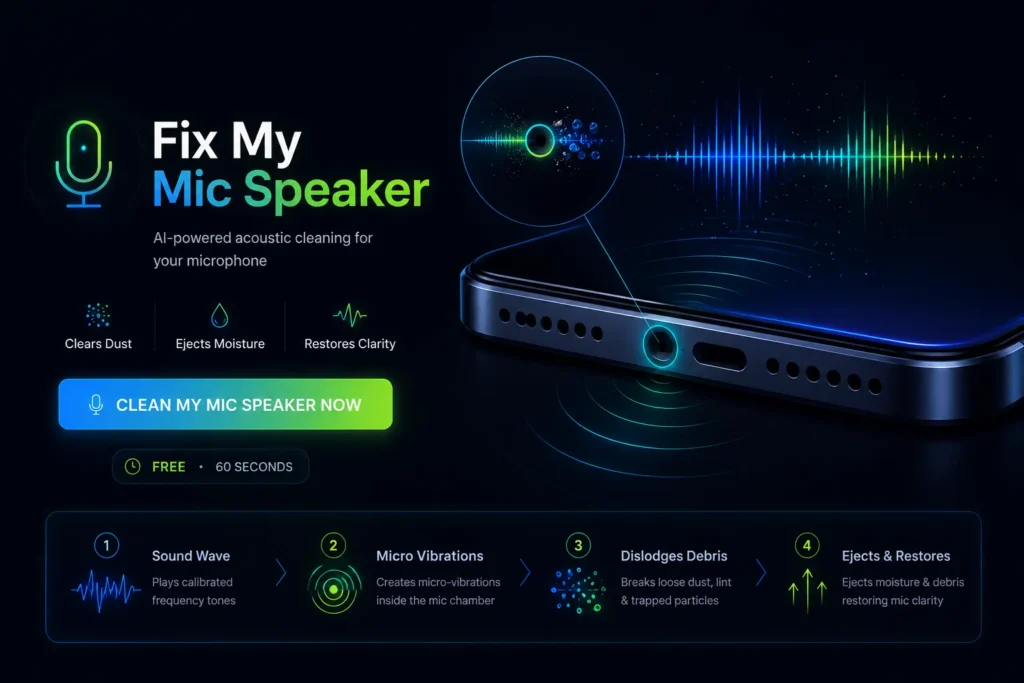
Fix My Mic Speaker is a free browser-based acoustic cleaning tool designed specifically for microphone problems. It works differently from the main speaker cleaner because the microphone sits in a separate pinhole opening — usually on the bottom edge of the phone near the charging port. That small opening traps fine dust, pocket lint, and moisture faster than the main speaker grille.
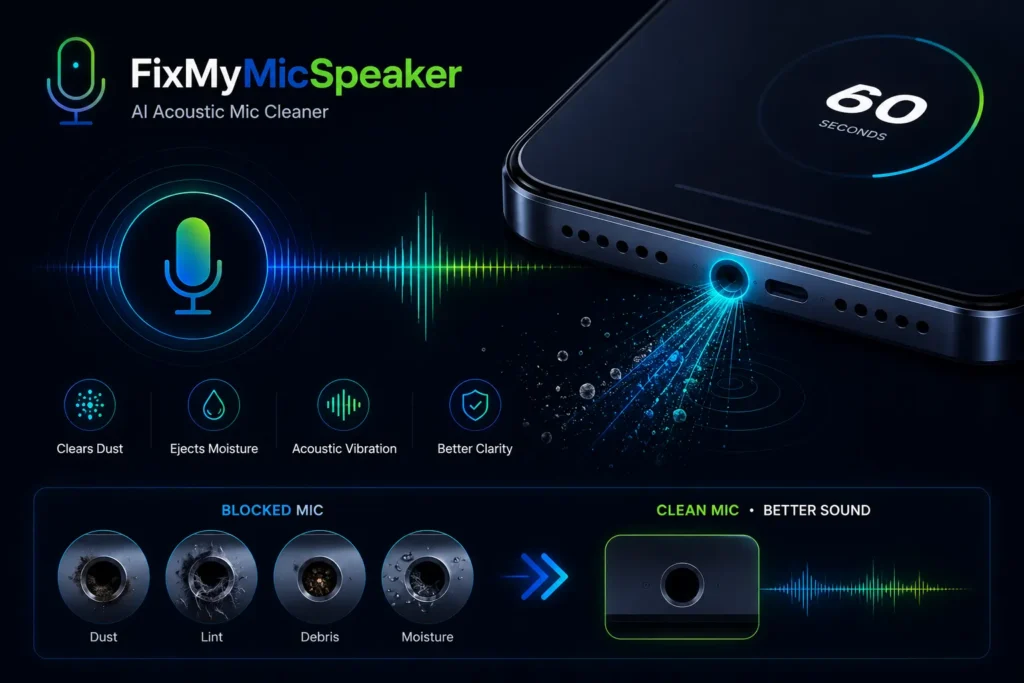
The tool plays calibrated sound frequencies that create micro-vibrations inside the microphone chamber. Those vibrations physically dislodge blocked debris and eject residual moisture from the mic pinhole — restoring the microphone diaphragm’s ability to capture sound clearly.
Clean My Mic Speaker Now — Free, 60 Seconds
What Is Fix My Mic Speaker?
Fix My Speaker is a digital microphone cleaner that targets the specific blockage types that degrade call and recording quality on smartphones. Unlike general speaker tools, this tool focuses on the microphone input channel — the pinhole that captures your voice during calls, video recordings, and voice memos.
Most microphone problems on smartphones are not hardware failures. They are blockage problems. Dust from pockets, pocket lint, fine debris from bags, and moisture from sweat or bathroom humidity pack into the microphone opening over time. The microphone diaphragm — the tiny membrane inside that vibrates to capture sound — cannot move freely when surrounded by blocked debris. The result is muffled voice capture, low recording volume, and distorted call audio.
Fix My Mic Speakers addresses this directly using acoustic frequency vibration — the same principle that powers precision ultrasonic cleaning equipment used in hospital and electronics manufacturing environments.
While Fix My Mic Speaker focuses on microphone and audio troubleshooting, our main Fix My Speaker
tool is designed to eject water and improve speaker performance using specially optimized sound frequencies.
How Do I Fix My Mic Speaker?
Step-by-Step Guide
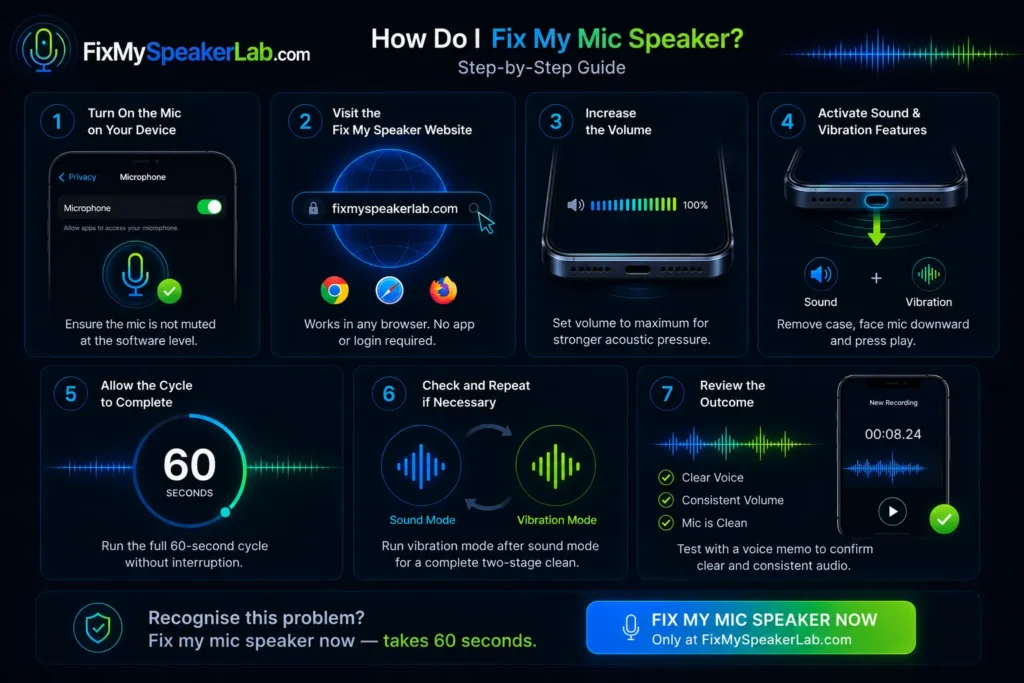
Step 1: Turn On the Mic on Your Device
Before running the tool, confirm your microphone is not muted at the software level. On iPhone, check Settings → Privacy → Microphone and confirm the mic is enabled. On Android, check app permissions and ensure no audio routing app is redirecting microphone input. A software mute causes the same symptoms as a physical blockage — ruling it out first saves time.
Step 2: Visit the Fix My Speaker Website.
Open the Fix My Mic Speakers tool in any browser — Chrome, Safari, or Firefox all work without any setup. The tool runs entirely inside the browser using Web Audio API and requires no microphone permission, no app download, and no account creation.
Step 3: Increase the Volume.
Set your device volume to maximum. Higher volume creates stronger acoustic pressure inside the microphone chamber, producing the vibration amplitude needed to dislodge packed dust and fine debris from the mic pinhole. On Android, check that no system volume limiter is capping output before you press play.
Step 4: Activate Sound and Vibration Features
Remove your phone case — cases dampen vibration and reduce cleaning effectiveness. Hold the phone with the microphone pinhole facing downward during the cleaning cycle. For most iPhones and Android devices, the microphone sits at the bottom edge near the charging port. Gravity assists debris ejection when the opening faces down. Press play to begin the cleaning cycle.
Step 5: Allow the Cycle to Complete.
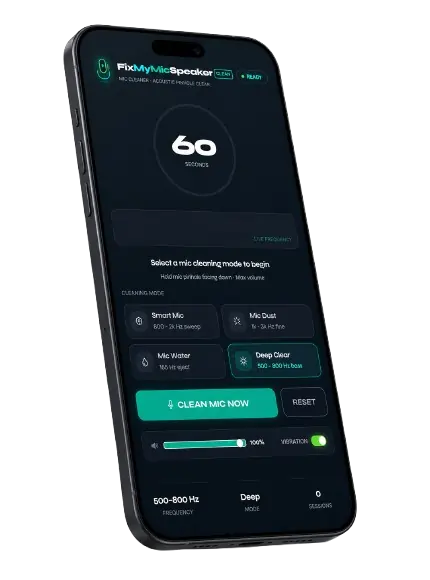
Run the full 60-second cycle without interrupting it. The frequency sweep covers the full resonant range needed to reach both the microphone pinhole surface and the internal diaphragm chamber. Stopping early cuts the cleaning short before the deeper vibration pass reaches residual debris.
Step 6: Check and Repeat if Necessary.
After the first cycle, switch to Vibration Mode. Low-frequency pulses create mechanical force that reaches deeper into the mic housing than the initial sound wave pass. Run vibration mode immediately after for a complete two-stage clean. For moisture-related microphone problems, run the full two-mode cycle twice and follow up with silica gel drying for 6 hours.
Step 7: Review the Outcome.
Test by recording a short voice memo at arm’s length and playing it back. Clear voice capture with consistent volume confirms the microphone is clean. If voice still sounds distant or muffled after two full cycles, check the physical pinhole for visible packed debris that may require manual soft-brush cleaning before running the acoustic cycle again.
Recognise this problem? Fix my mic now — takes 60 seconds.
4 Other Common Fixes for Mic Speakers
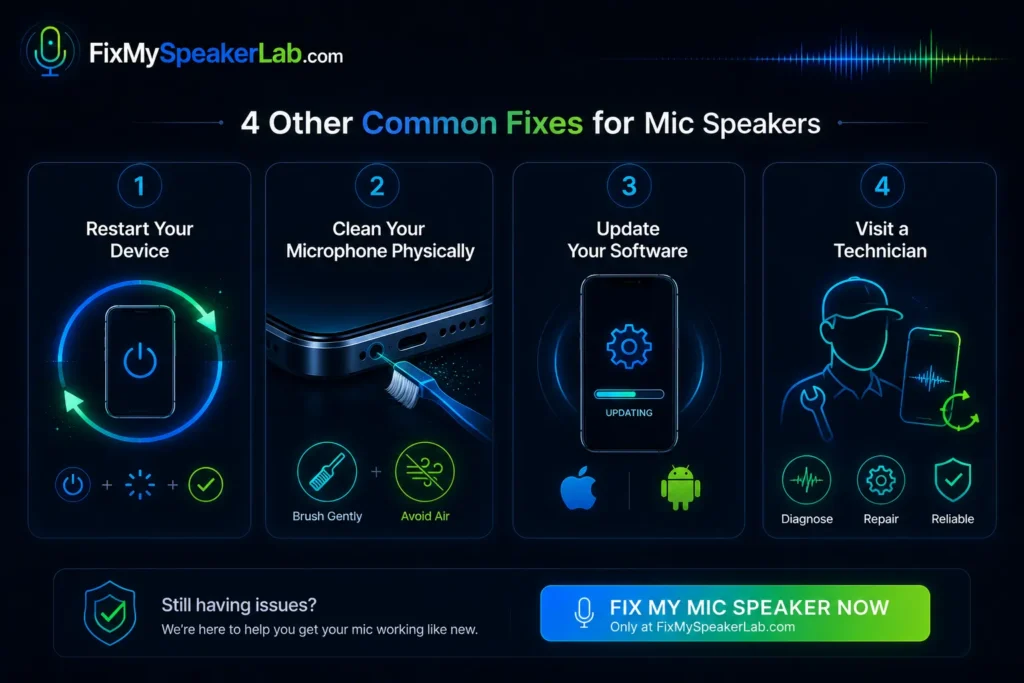
Restart Your Device
A software audio routing bug can cause the same muffled microphone symptoms as physical blockage. A full restart clears temporary audio driver states and resets microphone routing to the default input. Always restart before assuming the problem is physical — it resolves microphone issues more often than most users expect.
Clean Your Microphone Physically
For visible packed debris in the microphone pinhole, use a clean dry soft-bristle brush — a clean toothbrush works well — and brush gently across the pinhole opening in one direction. Never push anything into the pinhole itself. Compressed air can push debris deeper into the microphone chamber, making acoustic cleaning less effective. Brush the surface first, then run the Fix My Mic Speaker acoustic cleaning cycle to clear loosened particles.
Update Your Software
Outdated iOS or Android software can introduce microphone routing bugs that cause distorted input, low capture volume, or complete mic failure. Check for pending system updates before attempting any physical fix. On iPhone go to Settings → General → Software Update. On Android go to Settings → System → System Update. A software patch has resolved microphone problems for millions of users without any physical intervention.
Visit a Technician
If acoustic cleaning, physical brushing, restart, and software update all produce no improvement, the microphone diaphragm may be physically damaged — torn, warped by heat, or corroded by saltwater exposure. A technician can test microphone input signal strength directly and replace the microphone component if needed. Microphone replacement on most smartphones costs between $20 and $60 and takes under an hour at most repair shops.
How to Prevent Damage to Your Mic Speaker
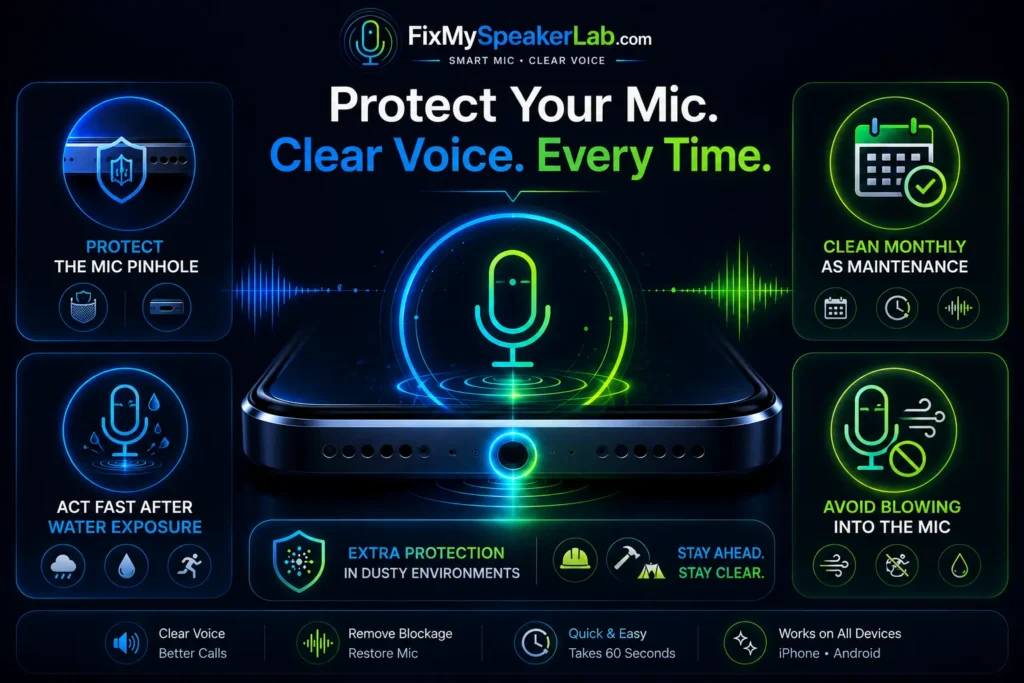
Keep the microphone pinhole covered when the phone is in a pocket or bag. Fabric lint is the most common cause of gradual microphone blockage — a protective case with a bottom port cover prevents most passive lint accumulation. After rain, sweat, or any water exposure, run one mic cleaning sound cycle immediately to eject moisture before it evaporates and leaves mineral deposits inside the microphone housing.
Run a mic cleaner sound cycle monthly as routine maintenance — even if call quality seems fine. Gradual blockage builds slowly and users rarely notice the quality drop until it becomes severe. A 60-second monthly phone mic cleaner session prevents that accumulation from ever reaching a noticeable level.
Avoid blowing directly into the microphone pinhole. Breath introduces humidity straight into the microphone chamber, adding moisture rather than removing debris. The Fix My Mic acoustic tool ejects debris outward without introducing any new moisture.
For dusty environments — workshops, construction sites, outdoor events — run a mobile mic cleaner session the same day as exposure. Fine airborne particles from these environments pack into the mic pinhole faster than normal daily use.
Conclusion
Muffled voice on calls and low recording volume are almost always caused by a blocked microphone pinhole — not permanent hardware damage. Fix My Mic clears that blockage in 60 seconds using targeted acoustic vibration, restoring call clarity and recording quality without physical tools or repair costs. Run the tool at maximum volume, allow both the sound wave and vibration cycles to complete, and test your voice recording. For main speaker problems, visit our dust removal guide or water ejection tool.
The microphone pinhole uses a MEMS microphone element — a technology explained in detail by Knowles Corporation, one of the world’s leading microphone manufacturers.
If calls sound muffled to others but clear to you, the ear speaker cleaner targets the earpiece grille separately from the microphone pinhole.
Related Tools
✔ Fix My Speaker
✔ Speaker Cleaner
✔ Water Eject Tool
✔ Laptop Speaker Cleaner